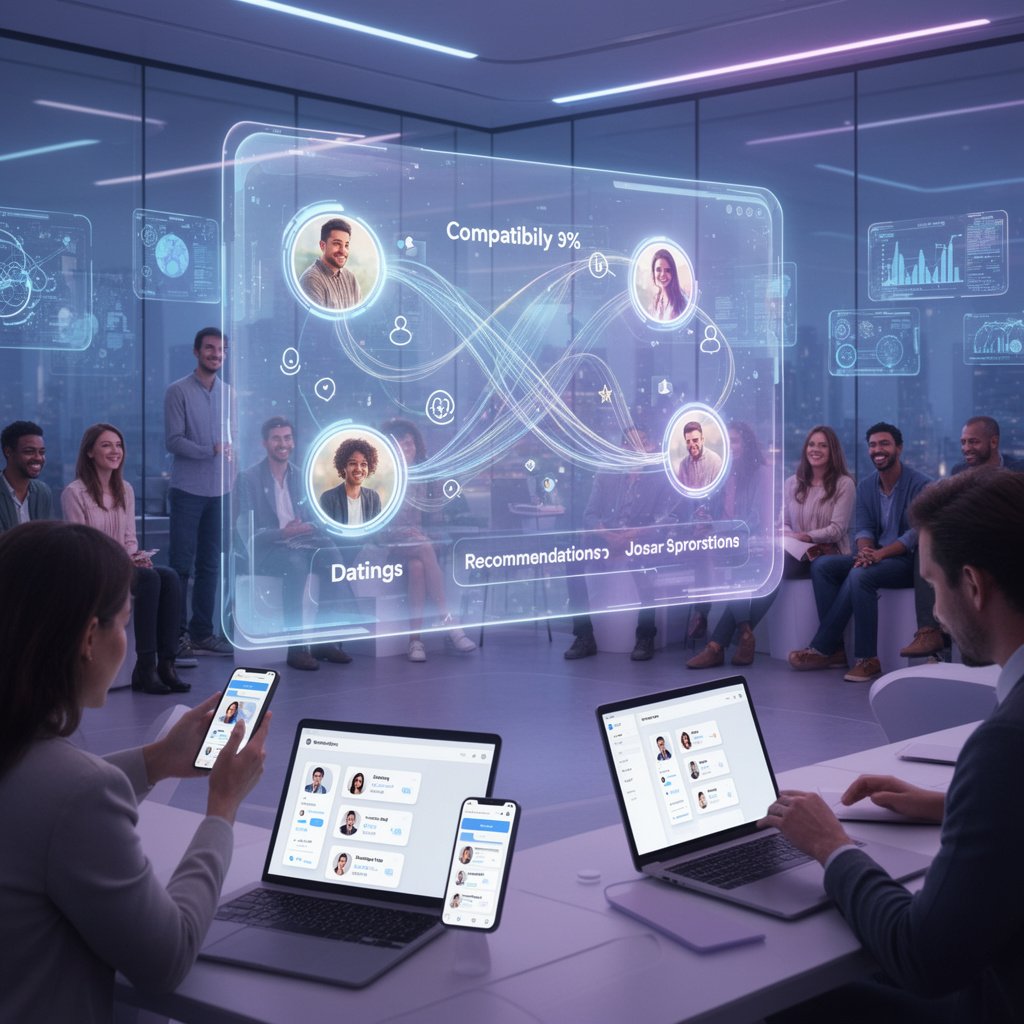
When my friend Sarah finally met her husband through a dating app three years ago, she joked that a computer knew her better than she knew herself. Turns out, she wasn’t entirely wrong. The recommendation that brought them together wasn’t random luck; it was the result of sophisticated AI matchmaking working behind the scenes.
These systems have quietly revolutionized how we find romantic partners, business collaborators, job candidates, and even gaming teammates. But what exactly powers these algorithms, and should we trust them with something as personal as a human connection?
Understanding How AI Matchmaking Actually Works
At its core, AI matchmaking relies on machine learning algorithms that analyze vast amounts of user data to predict compatibility. Think of it like a really observant friend who remembers every preference you’ve ever mentioned and cross-references them with millions of potential matches.
The process typically starts with explicit data, the information users voluntarily provide. Age, location, interests, education level, and career aspirations. Pretty straightforward stuff.
But here’s where it gets interesting. Modern matchmaking systems also track implicit data: how long you linger on certain profiles, which photos you zoom in on, your messaging patterns, response times, and even the types of conversations that lead to real-world meetings.
Collaborative filtering plays a huge role, too. If users with similar behavior patterns to yours found success with certain types of matches, the algorithm assumes you might as well. It’s essentially crowdsourced wisdom processed at incredible speed.
Beyond Dating: Where AI Matchmaking Shows Up
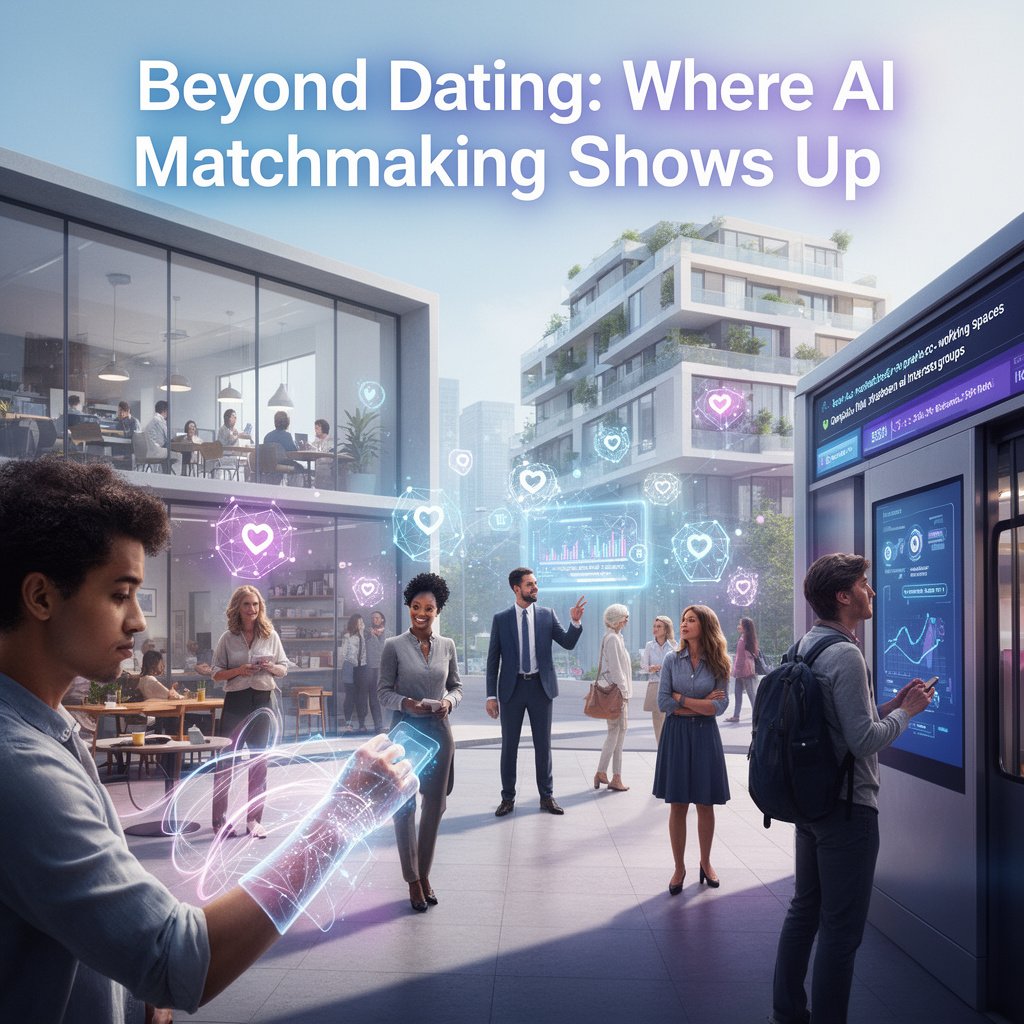
While dating apps grab headlines, AI matchmaking has spread far beyond romance.
Professional networking platforms now use similar technology to suggest mentors, collaborators, and business partners. LinkedIn’s “People You May Know” feature is matchmaking in disguise, analyzing your career trajectory against millions of professionals to surface meaningful connections.
Recruitment has been transformed, too. Companies like HireVue and Pymetrics use AI to match job candidates with roles based on cognitive abilities, personality traits, and cultural fit indicators. One hiring manager I spoke with last year mentioned that their AI system reduced time-to-hire by nearly 40% while improving retention rates.
Gaming matchmaking might be the most technically advanced application. Games like League of Legends and Fortnite use complex algorithms considering skill levels, playstyles, and behavioral patterns to create balanced, enjoyable matches. Get it wrong, and players quit. The stakes are surprisingly high.
Even venture capital has embraced this technology. Some investment firms now use AI matchmaking to connect startups with appropriate investors, analyzing everything from market sectors to founder personalities.
The Real Benefits People Experience
Speed stands out as the obvious advantage. What might take months of networking or years of dating happens in minutes. For busy professionals or people in smaller communities with limited options, this efficiency matters tremendously.
There’s also an accessibility angle worth mentioning. AI matchmaking democratizes connections. Someone in rural Montana has access to the same dating pool as someone in Manhattan. A first-generation college graduate can connect with mentors they’d never meet otherwise.
The pattern recognition these systems offer genuinely works for many people. Humans are notoriously bad at knowing what we want. We say we want one thing, but respond to something completely different. AI catches these discrepancies and often matches us with people who suit our actual preferences rather than our stated ones.
Where These Systems Fall Short
I’d be lying if I said AI matchmaking doesn’t have serious limitations.
The echo chamber problem is real. If algorithms keep showing you what you’ve responded to before, you might never discover unexpected connections. Some of the best professional and personal come from unlikely pairings that no algorithm would suggest.
Data quality presents another challenge. These systems are only as good as the information fed into them. People misrepresent themselves online. Photos get filtered beyond recognition. Career accomplishments get embellished. Garbage in, garbage out.
There’s also the cold start problem. New users without behavioral history receive generic matches until the system learns their patterns. Those first few weeks of poor recommendations cause many people to abandon platforms before experiencing their full potential.
Ethical Considerations We Can’t Ignore
The privacy implications deserve serious attention. These systems collect intimate data about our preferences, behaviors, and desires. What happens when that information gets breached? Or sold? The 2015 Ashley Madison hack exposed millions of users and led to documented suicides.
Algorithmic bias is another concern keeping researchers up at night. If historical data reflects societal prejudices which it inevitably does AI systems can perpetuate and amplify discrimination. Several studies have found dating app algorithms disadvantaging users based on race and other protected characteristics.
There’s something philosophically troubling about outsourcing deeply human decisions to machines. When algorithms influence who we date, hire, or befriend, we risk optimizing for metrics that miss what makes connections meaningful.
Looking Ahead
The technology continues evolving rapidly. Natural language processing improvements mean systems now analyze conversation quality, not just frequency. Sentiment analysis helps predict relationship longevity based on communication patterns.
Some platforms are experimenting with video analysis to assess chemistry during virtual dates. Others incorporate biometric data from wearables, such as heart rate variability during conversations, for instance.
Whether this represents progress or overreach depends on your perspective. What’s certain is that AI matchmaking isn’t going anywhere. The question becomes how we shape these systems to serve human flourishing rather than simply optimizing engagement metrics.
Frequently Asked Questions
How accurate are AI matchmaking systems?
Studies suggest success rates vary widely, somewhere between 20-40% for dating apps, leading to second dates. Professional matchmaking shows higher satisfaction rates, typically 50-60% employer satisfaction with AI-sourced candidates.
Can AI predict long-term compatibility?
Not reliably. Current systems excel at surface-level matching but struggle with deeper compatibility factors that emerge over time.
Do these systems discriminate against certain users?
Research indicates potential bias exists, particularly affecting racial minorities and older users on dating platforms. Many companies are actively working to address these issues.
Is my data safe on matchmaking platforms?
Security varies significantly. Check privacy policies carefully and assume your data may be used for purposes beyond matching.
Will AI eventually replace human matchmakers?
Unlikely entirely. High-end matchmaking services increasingly combine AI efficiency with human intuition for premium results.